Systems That Handle High Water Tables
Septic System Repair in Monroe for drain field saturation and tank failure in clay soil conditions
Septic failures show up as slow drains, sewage odors near the yard, or standing water above the drain field—problems that escalate quickly when clay soil and high water tables prevent proper drainage. James Plumbing Co. Inc. repairs septic tanks, drain fields, and distribution lines across Monroe and surrounding rural areas where non-municipal properties depend entirely on private wastewater systems. Established in 1963 and now in its third generation, the company diagnoses tank integrity issues, line blockages, and drain field saturation that clay-heavy soil conditions commonly cause in this region.
Septic system repair begins with inspection of the tank for cracks or baffle failures, evaluation of drain field saturation levels, and identification of distribution line blockages that prevent effluent from dispersing properly. When drain fields fail in areas with high water tables, percolation testing determines whether soil can still absorb wastewater or if field replacement becomes necessary. Proper vent function and soil grading around the system are assessed to prevent surface water from infiltrating the drain field and overwhelming its capacity.
Schedule a property inspection to identify the specific cause of your septic system failure.
What Proper Septic Repair Requires
Tank integrity checks reveal whether concrete has cracked, inlet or outlet baffles have deteriorated, or the tank has shifted due to soil movement. Distribution line inspections locate root intrusions, crushed pipes, or blockages that prevent effluent from reaching the drain field evenly. If the drain field itself has failed, percolation testing measures how quickly water absorbs into the soil—a critical step in clay-dominant areas where absorption rates drop significantly when soil stays saturated.
After repairs are completed, drains flow at normal speed again, sewage odors disappear from the yard, and standing water above the drain field recedes as the system processes wastewater correctly. James Plumbing Co. Inc. coordinates pumping when needed to remove sludge buildup that contributes to system stress, and adjusts grading to redirect surface runoff away from the drain field. Vent lines are cleared or replaced to maintain aerobic bacteria activity inside the tank, which breaks down solids before effluent enters the drain field.
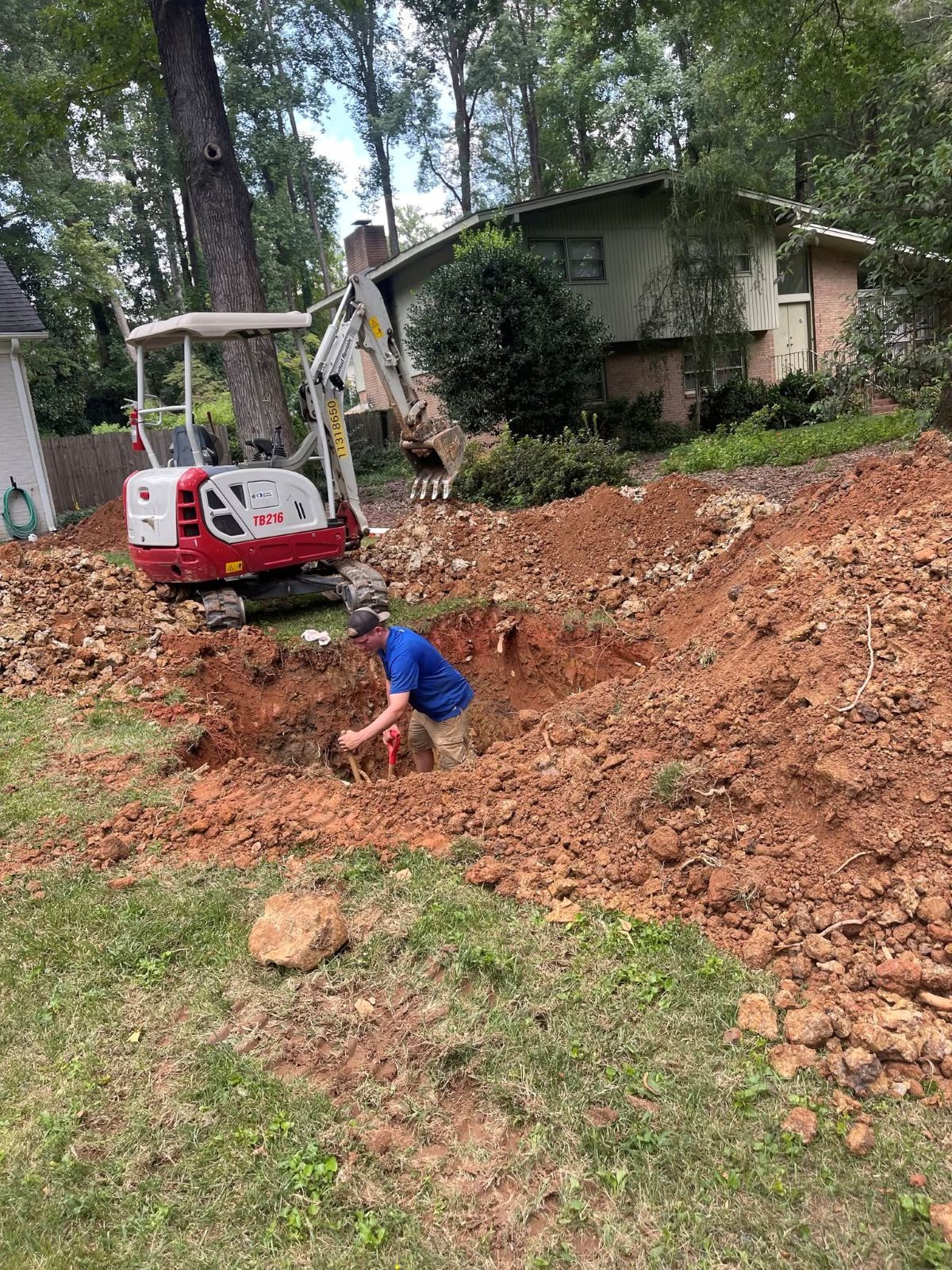
Repair scope depends on whether the tank, lines, or drain field has failed—some properties need only line cleaning and pumping, while others require drain field excavation and soil amendment to restore absorption capacity. Surface grading adjustments often accompany drain field work to prevent rainwater from pooling over the absorption area and keeping soil perpetually saturated.
What Homeowners Usually Ask
Septic repairs in rural Monroe often involve questions about how local soil and water conditions affect system longevity and what signs indicate different types of failure.
How do you determine whether the tank or drain field has failed?
Inspection separates tank issues like baffle damage or cracks from drain field problems such as soil saturation or root infiltration, and percolation testing measures whether the field can still absorb effluent at acceptable rates.
Why do septic systems fail more often in areas with clay soil and high water tables?
Clay soil absorbs water slowly, so when the water table rises during wet seasons, the drain field stays saturated and cannot accept additional effluent, causing backups and surface pooling that signal system failure.
What does percolation testing measure?
Percolation testing tracks how quickly water drains through soil in the drain field area, determining whether the ground can still handle wastewater absorption or if field replacement is required.
What happens if only the distribution lines are blocked?
Line cleaning or replacement restores even effluent flow across the drain field without requiring excavation of the entire absorption area, and pumping removes accumulated solids that contribute to blockages.
How does improper grading contribute to septic failure?
When surface water drains toward the drain field instead of away from it, soil stays saturated year-round and loses its ability to absorb effluent, leading to system overload and visible ponding above the field.
James Plumbing Co. Inc. has served commercial and residential properties since 1963, diagnosing septic failures caused by the clay soil and water table conditions common across Monroe and Indian Trail. Request a septic system evaluation to determine whether tank repair, line clearing, or drain field work will restore proper function.
