Supply and Drainage Built for Exterior Use
Outdoor Kitchen Plumbing in Monroe for installations requiring freeze-protected lines and proper drainage slope
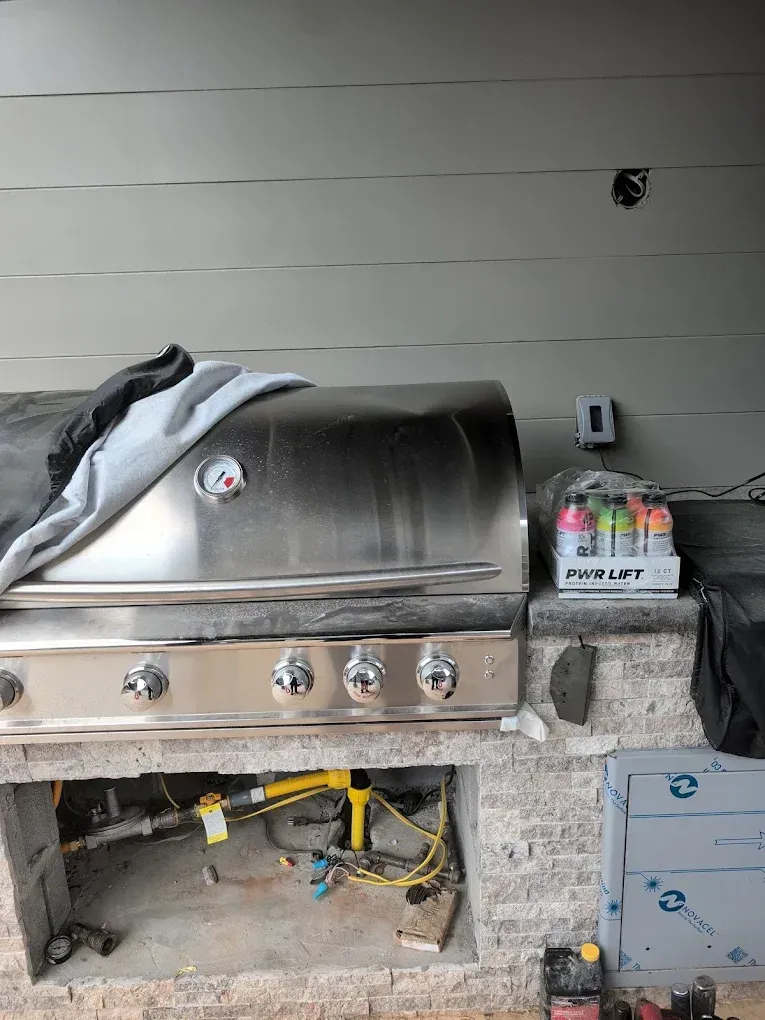
Outdoor kitchens require more than extending a garden hose and hoping for the best—proper installations include underground supply routing with freeze-thaw protection, hot and cold water separation, gravity-slope drainage design, and backflow prevention that meets local code. Suburban Charlotte demand for outdoor living spaces has increased over the past decade, and homeowners in Monroe and Indian Trail frequently add sinks, grills, and refrigeration prep areas that require dedicated plumbing rather than temporary hookups. James Plumbing Co. Inc. installs code-compliant outdoor kitchen plumbing with the same standards applied to interior work, ensuring that supply lines don't rupture during winter and drainage doesn't pool or back up into the house.
Underground line routing accounts for freeze-thaw considerations by burying supply lines below frost depth or installing frost-proof fixtures that drain automatically when shut off. Hot and cold supply lines are separated to prevent thermal expansion issues, and drain slope is calculated to ensure gravity flow without standing water that breeds mosquitoes or damages cabinetry. Backflow prevention devices are installed where required to keep contaminated water from reversing into potable supply lines.
Arrange a site evaluation to review your outdoor kitchen layout and discuss supply and drainage routing options before hardscaping is finalized.
What Outdoor Kitchen Plumbing Actually Accomplishes
Outdoor kitchen plumbing begins with trenching for underground supply and waste lines, routed to avoid interference with landscaping, irrigation systems, and underground utilities. Supply lines are installed with proper depth and insulation to survive winter temperatures, and shut-off valves are placed indoors or in heated spaces so you can isolate the outdoor system before freezing weather arrives. Drain lines are sloped at a minimum of one-quarter inch per foot to ensure waste water flows to the main sewer or septic system without creating low spots where water collects and freezes.
Once installation is complete, you'll have functional hot and cold water at your outdoor sink, no standing water in drain lines after use, and confidence that supply lines won't burst during the first hard freeze. Fixtures operate with consistent pressure because lines are properly sized, and drainage clears quickly without the gurgling or slow flow that indicates inadequate slope or venting. You'll also receive backflow prevention documentation if your municipality requires it, which is common in areas where outdoor kitchens connect to potable water systems.
Material selection matters for outdoor plumbing—PEX is often used for supply lines due to its flexibility and freeze resistance, while PVC handles drain lines in most residential applications. Copper remains an option for supply lines but costs more and requires additional freeze protection in the form of insulation or heat tape in exposed sections..
Questions Before Starting Your Project
Homeowners planning outdoor kitchens want to understand what the plumbing install involves, how it differs from indoor work, and what protects their investment from weather damage.
What's the difference between outdoor and indoor plumbing?
Outdoor plumbing must withstand freeze-thaw cycles, UV exposure, and temperature extremes that indoor plumbing never experiences, which requires frost-proof fixtures, proper burial depth, and materials rated for exterior use.
How deep do outdoor kitchen supply lines need to be buried?
Supply lines are typically buried below the local frost line—around 12 to 18 inches in the Monroe area—to prevent freezing and rupture during winter, though frost-proof fixtures allow for shallower installation by draining automatically when shut off.
What happens if outdoor plumbing isn't sloped correctly?
Improper slope causes standing water in drain lines, which leads to mosquito breeding, foul odors, frozen pipes in winter, and eventual backups into the outdoor sink or adjacent indoor plumbing—gravity drainage requires consistent downward pitch from fixture to sewer connection.
Do outdoor kitchens require permits in Monroe?
Most outdoor kitchen plumbing requires a permit because it involves permanent connections to potable water and sewer systems, and backflow prevention devices must be inspected and documented to meet local health and safety codes.
What's the best time of year to install outdoor kitchen plumbing?
Installation is easiest when ground conditions are dry and temperatures are moderate, typically spring or fall, but the work can be completed year-round as long as ground isn't frozen solid—scheduling before hardscaping or paving allows for easier trenching and line routing.
James Plumbing Co. Inc. has installed outdoor kitchen plumbing throughout Monroe, Indian Trail, and the Charlotte corridor, using code-compliant materials and methods that withstand seasonal temperature swings. Call to discuss your outdoor kitchen plans and schedule an installation before your hardscape contractor begins work.
